Test Online Free Microsoft AZ-400 Exam Questions and Answers
Practice a live sample before buying full access. This page keeps the free AZ-400 question set organized by page so visitors and search engines can reach the canonical -questions.html URL directly.
DRAG DROP
You provision an Azure Kubernetes Service (AKS) cluster that has RBAC enabled. You have a Helm chart for a client application.
You need to configure Helm and Tiller on the cluster and install the chart.
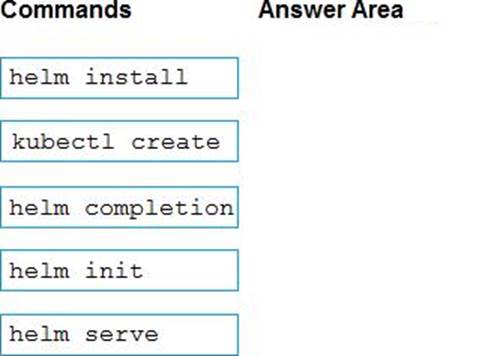
Which three commands should you recommend be run in sequence? To answer, move the appropriate commands from the list of commands to the answer area and arrange them in the correct order.
Answer:
Explanation:
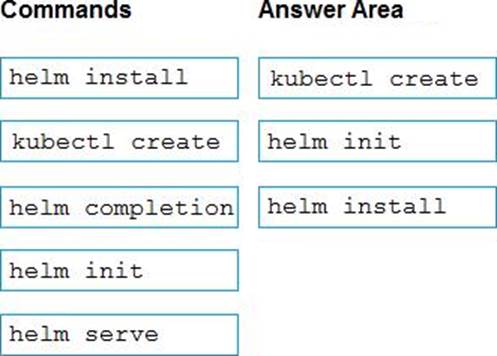
Step 1: Kubectl create
You can add a service account to Tiller using the --service-account <NAME> flag while you’re configuring Helm (step 2 below). As a prerequisite, you’ll have to create a role binding which specifies a role and a service account name that have been set up in advance.
Example: Service account with cluster-admin role
$ kubectl create -f rbac-config.yaml
serviceaccount "tiller" created
clusterrolebinding "tiller" created
$ helm init --service-account tiller
Step 2: helm init
To deploy a basic Tiller into an AKS cluster, use the helm init command.
Step 3: helm install
To install charts with Helm, use the helm install command and specify the name of the chart to install.
References:
https://docs.microsoft.com/en-us/azure/aks/kubernetes-helm
https://docs.helm.sh/using_helm/#tiller-namespaces-and-rbac
Question 47Written Answer
DRAG DROP
You have app named App1. You have a Log Analytics workspace named Workspace1 that contains two tables named Events and Logs. App1 manage events in multiple locations and writes logs to Workspace1.
You need to query Workspace1 for all log entries related to Asia that occurred during the last two days.
In which order should you arrange the query statements?
Answer:
Question 48Selectable Answer
Note: This question is part of a series of questions that present the same scenario. Each question in the series contains a unique solution that might meet the stated goals. Some
question sets might have more than one correct solution, while others might not have a correct solution.
After you answer a question in this section, you will NOT be able to return to it. As a result, these questions will not appear in the review screen.
Your company uses Azure DevOps to manage the build and release processes for applications.
You use a Git repository for applications source control.
You need to implement a pull request strategy that reduces the history volume in the master branch.
Solution: You implement a pull request strategy that uses squash merges.
Does this meet the goal?
Answer:
Question 49Written Answer
You manage projects by using Azure Boards.
You have a current work item name item A that is dependant on a work item named item3.
You need to define the dependency for item A.
What should you do in the web portal for Azure DevOps?
A. From Backlogs, open the context menu, select Add link and then select item3. Set Link type to Related and add the ID of item A
B. From item A open the Links tab, and then select Add link. Set Link type to Successor and add the ID of item B.
C. From Queries, open the context menu, select Add link, and then select Existing item.
Set Link type to Affected By and add the ID of item B.
D. From item A, open the Links tab, and then select Add link. Set Link type to References and add the ID Of item B.
Answer: B
Question 50Written Answer
DRAG DROP
You manage the Git repository for a large enterprise application.
During the development of the application, you use a file named Config.json.
You need to prevent Config.json from being committed to the source control whenever changes to the application are committed.
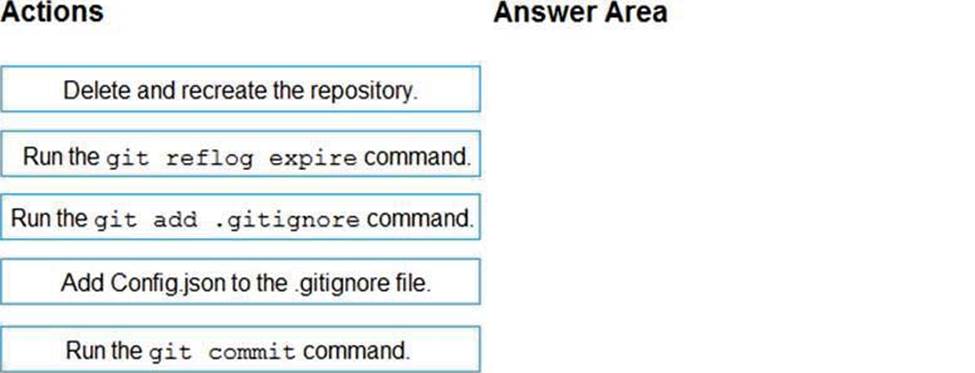
Which three actions should you perform in sequence? To answer, move the appropriate actions from the list of actions to the answer area and arrange them in the correct order.
Answer:
Explanation:
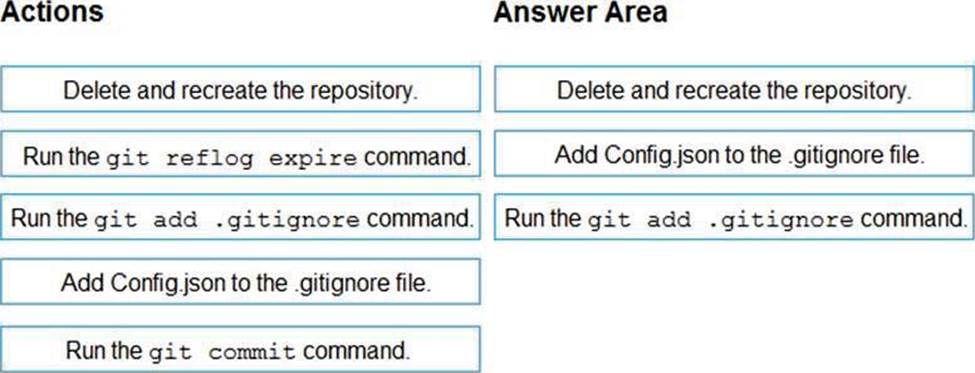
Step 1: Delete and recreate the repository.
Step 2: Add Config.json to the .gitignore file
Each line in the .gitignore excludes a file or set of files that match a pattern.
Example:
# ignore a single file Config.json
Step 3: Run the git add .gitignore command
At the initial commit we want basically move from Untracked to Staged, for staging we have to indicate which file we want to move or specify a pattern, as example:
Question 51Selectable Answer
You have an Azure DevOps organization that contains a project named Project1.
You need to create a published wiki in Project1.
What should you do first?
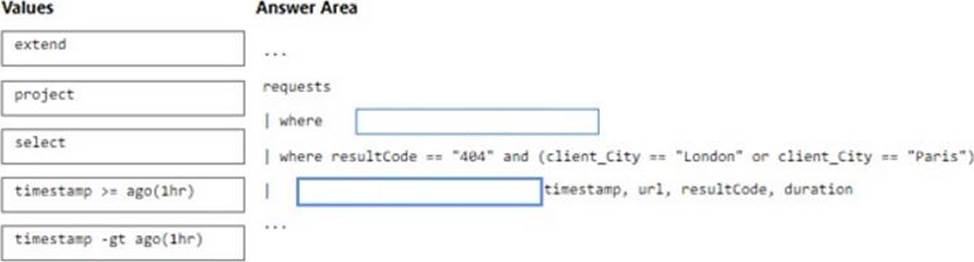
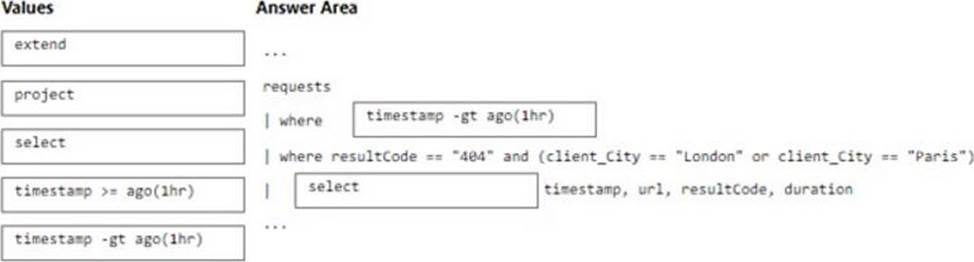
DRAG DROP
You have web app named App1 that uses Application Insights in Azure Monitor to Store log data. App1 has users in multiple locations.
You need to query App1 requests from London and Paris that return error.
The solution must meet the following requirements:
✑ Return the timestamp, url, result Code, and duration fields.
✑ Only requests made the last hour.
How shout you complete the query?
Answer:
Question 53Selectable Answer
Which branching strategy should you recommend for the investment planning applications suite?
Answer: Explanation:
Scenario: A branching strategy that supports developing new functionality in isolation must be used.
Feature isolation is a special derivation of the development isolation, allowing you to branch one or more feature branches from main, as shown, or from your dev branches.
When you need to work on a particular feature, it might be a good idea to create a feature branch.
Question 54Written Answer
HOTSPOT
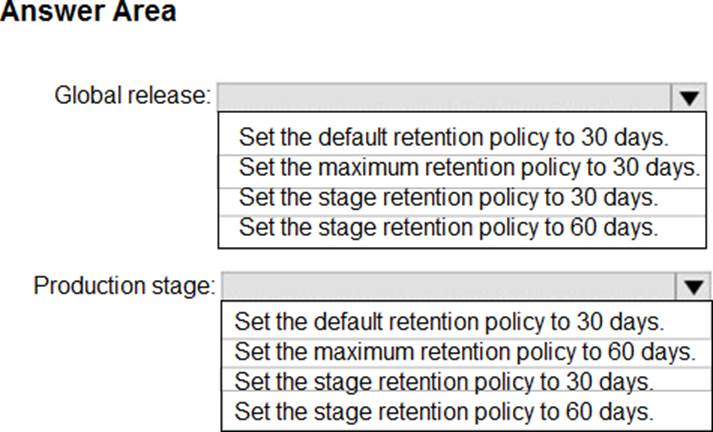
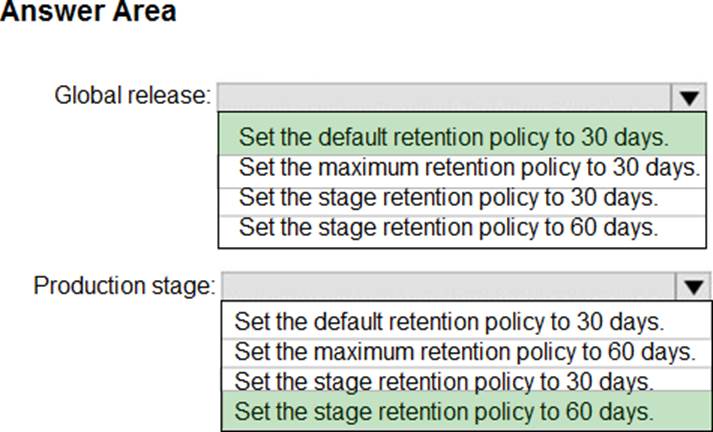
How should you configure the release retention policy for the investment planning applications suite? To answer, select the appropriate options in the answer area. NOTE: Each correct selection is worth one point.
Answer:
Explanation:
Scenario: By default, all releases must remain available for 30 days, except for production releases, which must be kept for 60 days.
Box 1: Set the default retention policy to 30 days
The Global default retention policy sets the default retention values for all the build pipelines. Authors of build pipelines can override these values.
Box 2: Set the stage retention policy to 60 days
You may want to retain more releases that have been deployed to specific stages.
References: https://docs.microsoft.com/en-us/azure/devops/pipelines/policies/retention
Question 55Selectable Answer
Your company implements an Agile development methodology.
You plan to implement retrospectives at the end of each sprint.
Which three questions should you include? Each correct answer presents part of the solution. NOTE: Each correct selection is worth one point.
You use Azure Pipelines to manage build pipelines. GitHub to store source code, and Dependabot to manage dependencies.
You have an app named App1.
Dependabot detects a dependency in App1 that requires an update.
What should you do first to apply the update?
Answer: Explanation:
DependaBot is a useful tool to regularly check for dependency updates. By helping to keep your project up to date, DependaBot can reduce technical debt and immediately apply security vulnerabilities when patches are released.
How does DependaBot work?
✑ DependaBot regularly checks dependencies for updates
✑ If an update is found, DependaBot creates a new branch with this upgrade and Pull Request for approval
✑ You review the new Pull Request, ensure the tests passed, review the code, and decide if you can merge the change
Reference: https://samlearnsazure.blog/2019/12/20/github-using-dependabot/
Question 57Selectable Answer
You need !0 the merge the POC branch into the default branch. The solution must meet the technical requirements.
Which command should you run?
Answer:
Question 58Selectable Answer
You have Azure Pipelines and GitHub integrated as a source code repository.
The build pipeline has continuous integration enabled.
You plan to trigger an automated build whenever code changes are committed to the repository.
You need to ensure that the system will wait until a build completes before queuing another build.
What should you implement?
Answer: Explanation:
Batching CI runs
If you have many team members uploading changes often, you may want to reduce the number of runs you start. If you set batch to true, when a pipeline is running, the system waits until the run is completed, then starts another run with all changes that have not yet been built.
Example:
# specific branch build with batching trigger:
batch: true branches: include:
- master
To clarify this example, let us say that a push A to master caused the above pipeline to run. While that pipeline is running, additional pushes B and C occur into the repository. These updates do not start new independent runs immediately. But after the first run is completed, all pushes until that point of time are batched together and a new run is started.
Reference: https://docs.microsoft.com/en-us/azure/devops/pipelines/repos/github
Question 59Selectable Answer
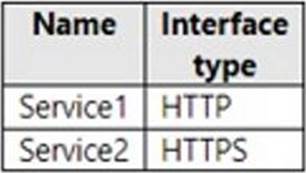
You have the services shown in the following table.
You manage a project by using Azure Boards.
You need to notify the services Of build Status changes.
Which services can be notified by using a web hook?
Answer:
Question 60Written Answer
HOTSPOT
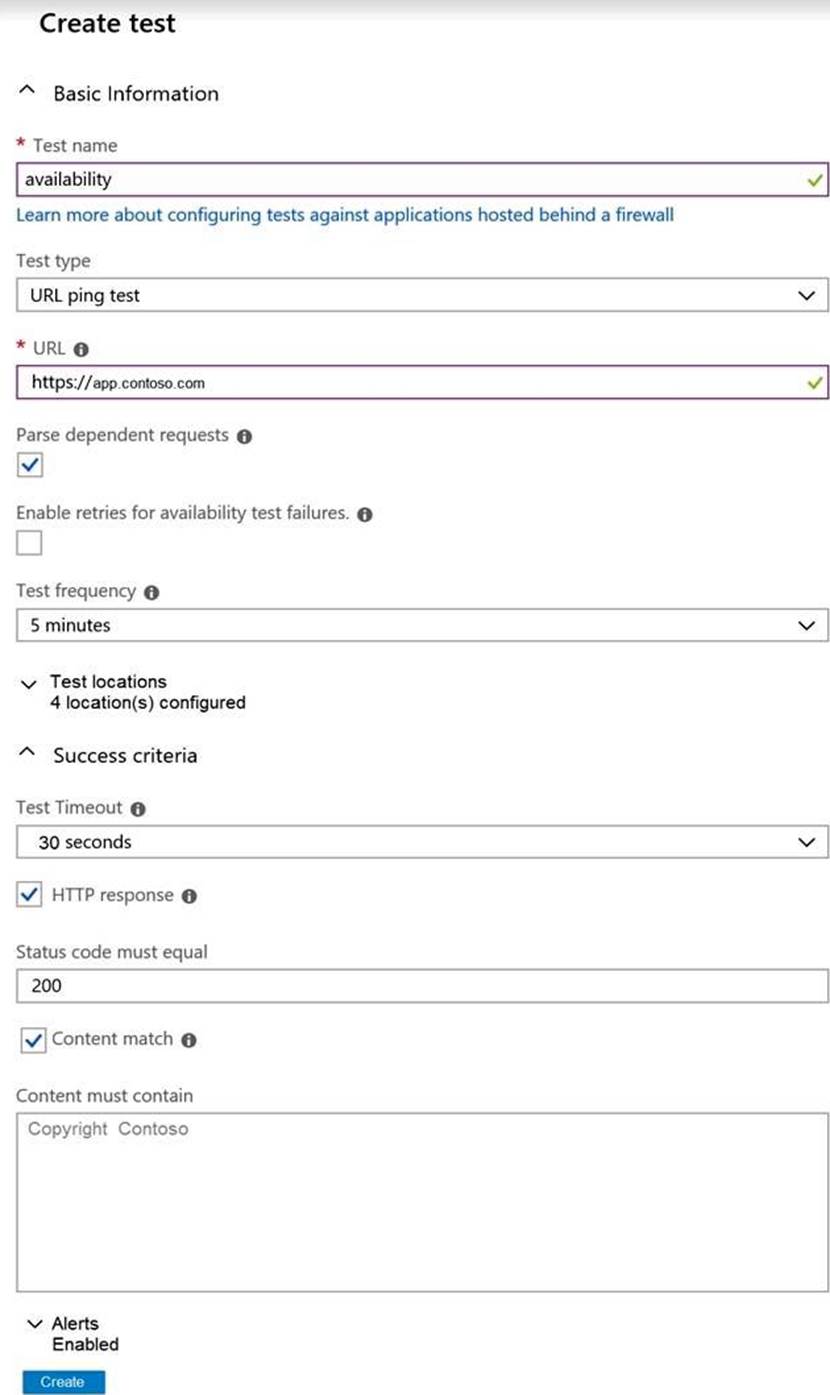
You have an application named App1 that has a custom domain of app.contoso.com.
You create a test in Azure Application Insights as shown in the following exhibit.
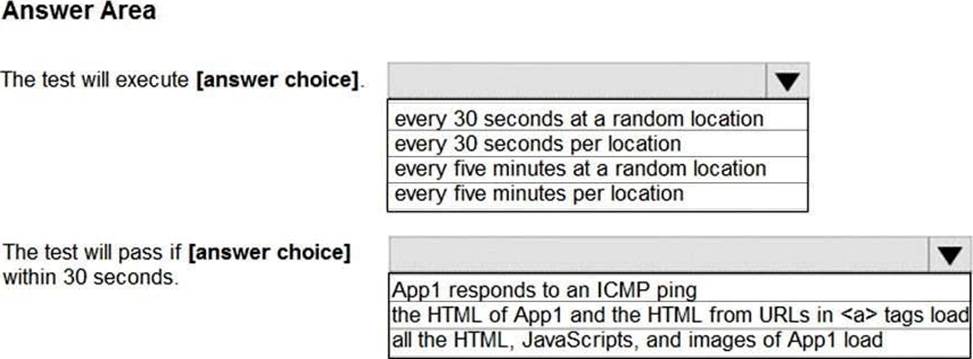
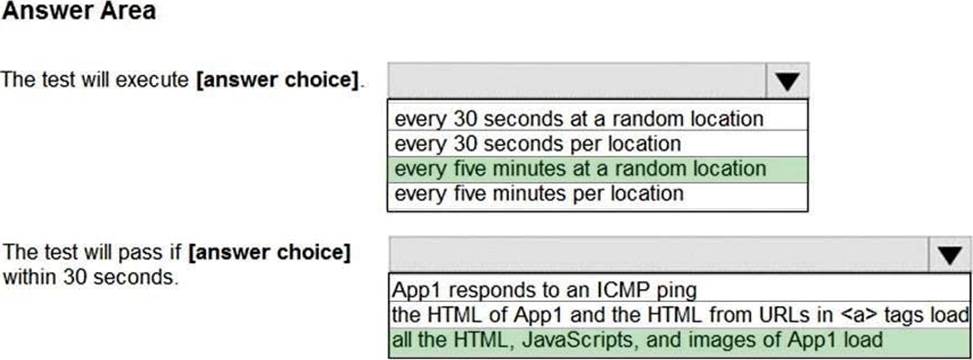
Use the drop-down menus to select the answer choice that completes each statement based on the information presented in the graphic. NOTE: Each correct selection is worth one point.
Answer:
Explanation:
Box 1: every five minutes at a random location
Test frequency: Sets how often the test is run from each test location. With a default frequency of five minutes and five test locations, your site is tested on average every minute.
Box 2:
Parse dependent requests: Test requests images, scripts, style files, and other files that are part of the web page under test. The recorded response time includes the time taken to get these files. The test fails if any of these resources cannot be successfully downloaded within the timeout for the whole test.